
Journal·June 26, 2026·photography · golden-hour · sedona-outdoors · local-guide · things-to-do
Where to Actually Be in Sedona at Golden Hour
Golden hour in Sedona isn't magic by accident — it's about knowing which rocks face which direction and getting there before everyone else does
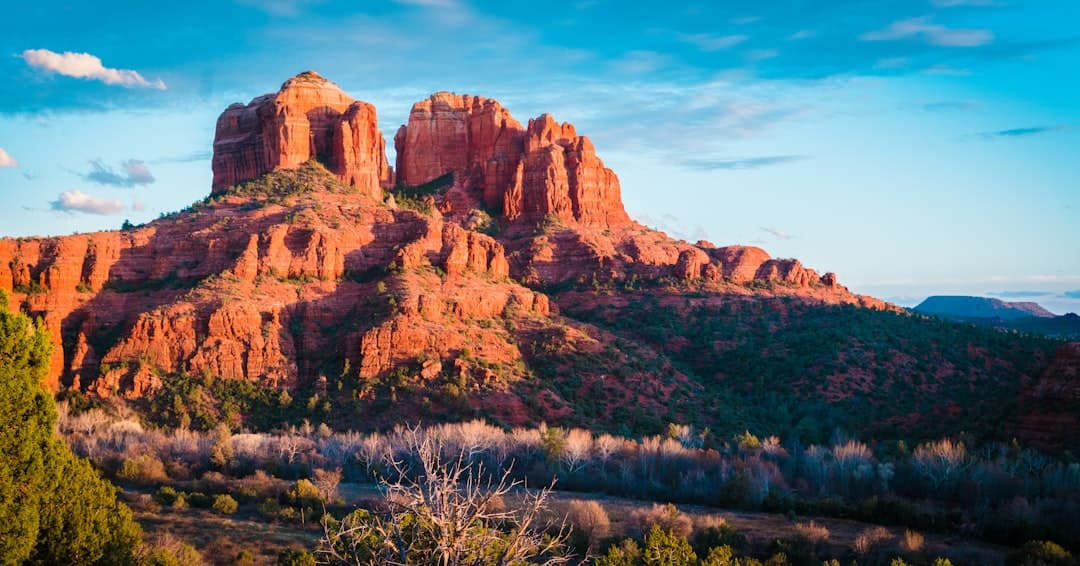
Photo by Kaileen Fitzpatrick on Unsplash
Most people end up at Airport Mesa because someone told them to. It's fine. The view is broad, the parking lot fills up an hour before sunset, and you'll share the moment with fifty strangers and their tripods. There are better options — not secret, just less obvious — and the difference between a good shot and a great one usually comes down to timing and facing the right direction.
Here's where I actually go, and what to expect when you get there.
Cathedral Rock from Red Rock Crossing
This is probably the single best reflection shot in Sedona when the creek is running. You park at the Crescent Moon Picnic Area (there's a $12 day-use fee), walk about five minutes to Oak Creek, and face northeast. The light hits the back side of Cathedral Rock directly at golden hour — warm orange, deeply shadowed — and on calm evenings the water holds a clean reflection.
The honest caveat: Oak Creek runs shallow or nearly dry in late summer and fall. If you're visiting May through July, after snowmelt, you're more likely to get the reflection. Check the flow before you drive out there.
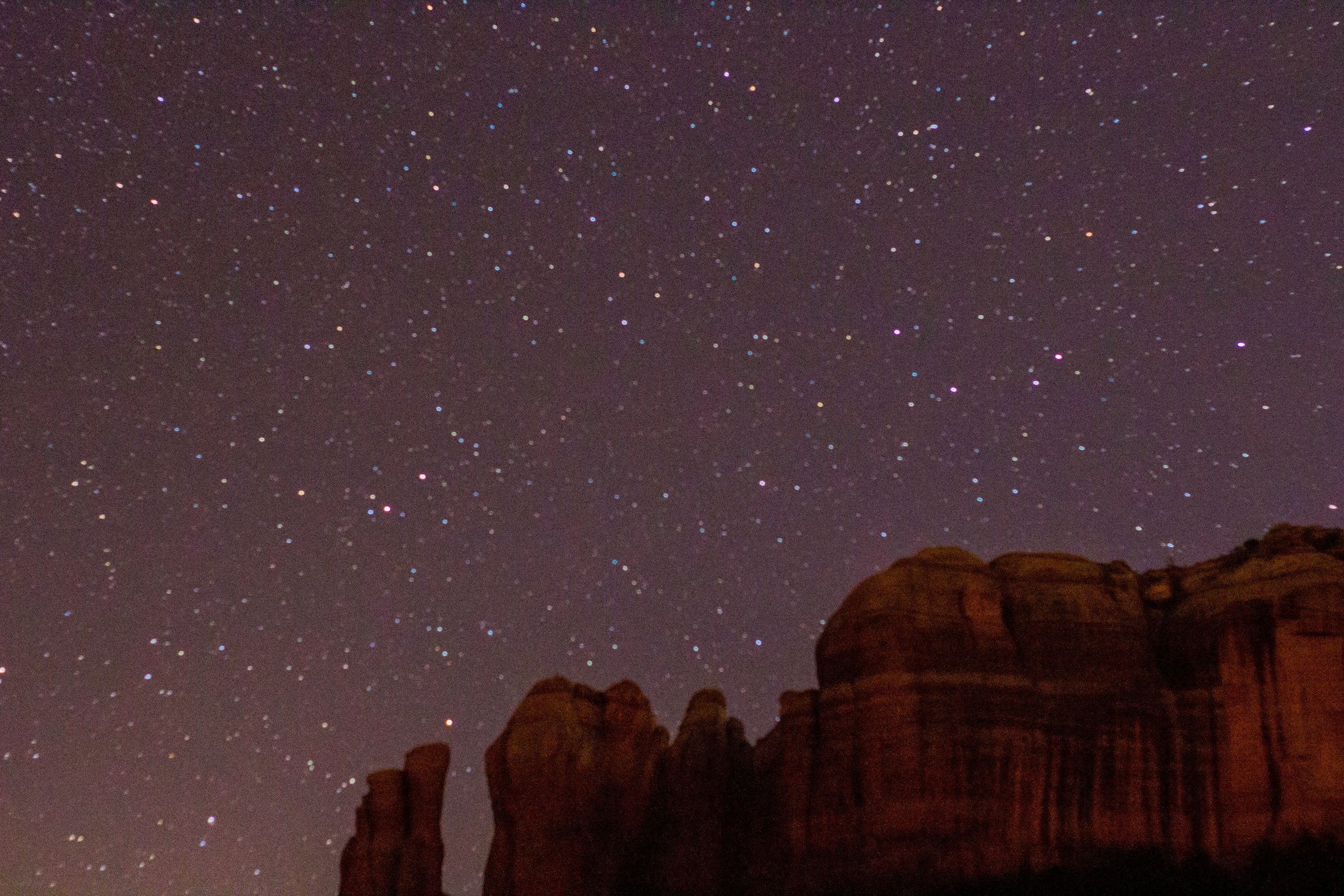
Cathedral Rock catches light differently after dark too — if you're staying nearby, the transition from golden hour to blue hour to full dark is worth watching from this same position.
Bell Rock from the Pullout on 179
Bell Rock faces almost due west, which makes it one of the few formations that glows front-on at sunset rather than in silhouette. There's a small paved pullout on Highway 179 about a mile south of the Village of Oak Creek — nothing marked, just a place to stop.
The formation is approachable on foot, and you can scramble partway up the lower ledges to get above the scrub brush for a cleaner foreground. I usually go about 15-20 feet up, find a flat shelf, and shoot back toward the road with Bell Rock filling the right half of the frame and open sky on the left. The light quality there between 5:30 and 6:00 PM in summer is some of the best in Sedona.
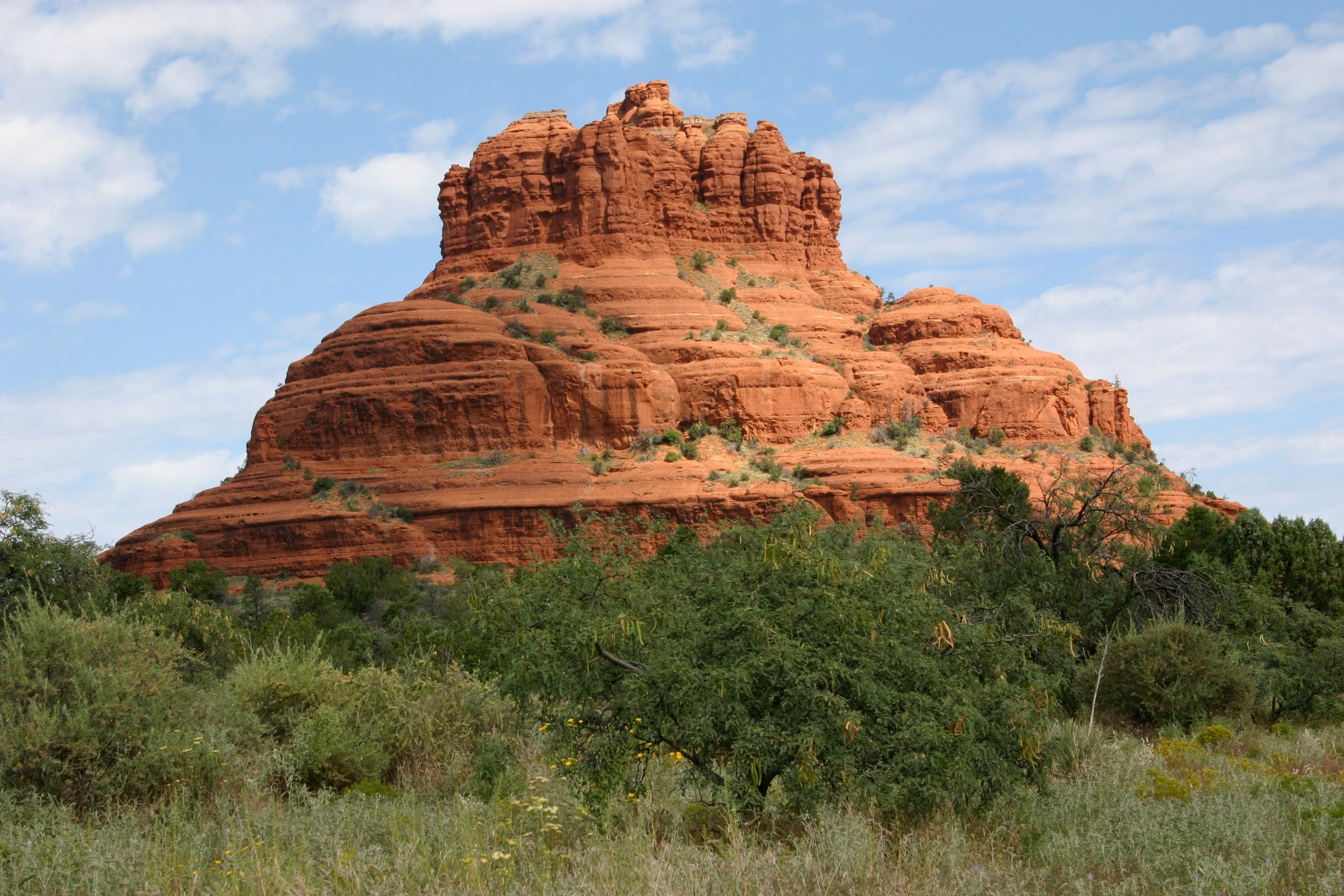
Bell Rock from the lower ledges at golden hour — the west-facing slope picks up direct light while the surrounding valley goes amber.
Schnebly Hill Road for Wide-Open Composition
If you want red rock with no buildings, no road signs, and a longer shooting window, drive up Schnebly Hill Road. It turns to dirt about half a mile in and climbs fast — a high-clearance vehicle helps, but in dry conditions a regular sedan can usually make it the first mile or so before it gets rough.
The overlooks along the first stretch give you an east-facing panorama. That means morning light is better than sunset here. But turn around and face west — toward Sedona's mesa and the sky behind you — and at golden hour you get the canyon lit from above with deep shadows cutting through the formations below. It's a different kind of shot than the Cathedral or Bell Rock classics. More geological. Less postcard.
The Chapel Area for the Approach, Not the Destination
Everyone photographs the Chapel of the Holy Cross straight-on. That shot exists, it's iconic, and it's been taken about ten million times. What's actually interesting at golden hour is the road leading up to it — Chapel Road runs through a narrow canyon where the walls catch the last light while everything in shadow goes deep red-purple. Park at the bottom near the residential area and walk up. You'll find compositions the parking-lot crowd misses entirely.
The chapel itself closes at 5 PM, so if you're arriving at golden hour in summer, you won't get inside. But honestly, the exterior and the surrounding rock in that light is more interesting photographically anyway.
One Practical Note on Timing
Sedona sits in a bowl. The sun drops behind the western mesas well before it actually sets — sometimes 30 to 45 minutes early, depending on where you're standing. Golden hour here ends faster than you expect. I plan to be at my spot at least 90 minutes before official sunset, especially in fall when the window shortens quickly.
If you make it out to Red Rock Crossing, stay past the golden light. The blue hour that follows — 20 minutes of soft, even illumination — is underrated and far less crowded.
Notes from Sedona
Want these in your inbox?
Once a month I send the new posts straight to subscribers. Skip checking the site.