
Journal·July 17, 2026·winter · shoulder-season · hiking · local-tips · weather · sedona
Sedona in Winter: Why the Shoulder Season Is the Best Season
Most people skip Sedona in January — and that's exactly why it's my favorite time to be here
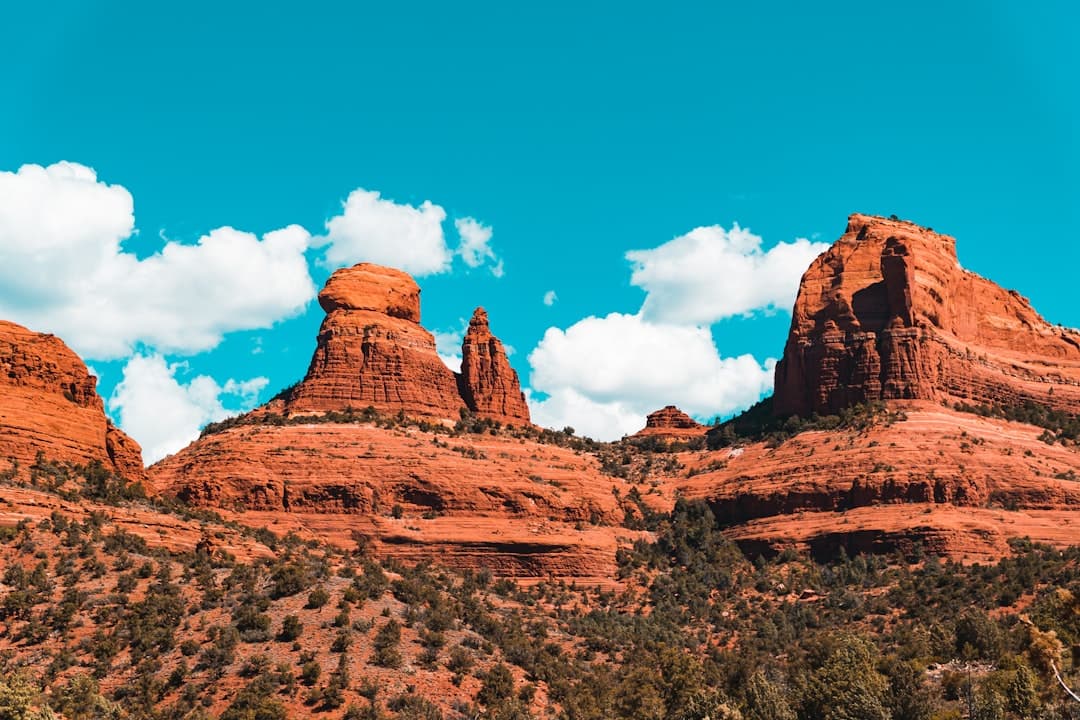
Photo by Anthony Melone on Unsplash
Most people assume Sedona is a summer destination. They're wrong, and honestly, I'm a little glad they think that. From late November through February, this place quietly becomes something else — quieter, sharper, a little wilder. The crowds thin, the light gets strange and beautiful, and the red rocks occasionally wear a dusting of snow that makes the whole landscape look unreal.
The Crowds — or the Lack of Them
In peak season, parking at Cathedral Rock trailhead fills by 7:30 a.m. The Y intersection backs up on Friday afternoons. Uptown can feel like a mall in December — not the December you'd imagine here, but the retail kind.
Winter changes that. I've hiked Boynton Canyon on a Tuesday in January and passed maybe four other people the whole morning. That's a trail that sees hundreds of visitors on a summer Saturday. The parking situation at most trailheads goes from frustrating to almost laughably easy.
If you've been to Sedona before and left feeling like you never quite got away from the noise of it, come back in winter. It's a different place.
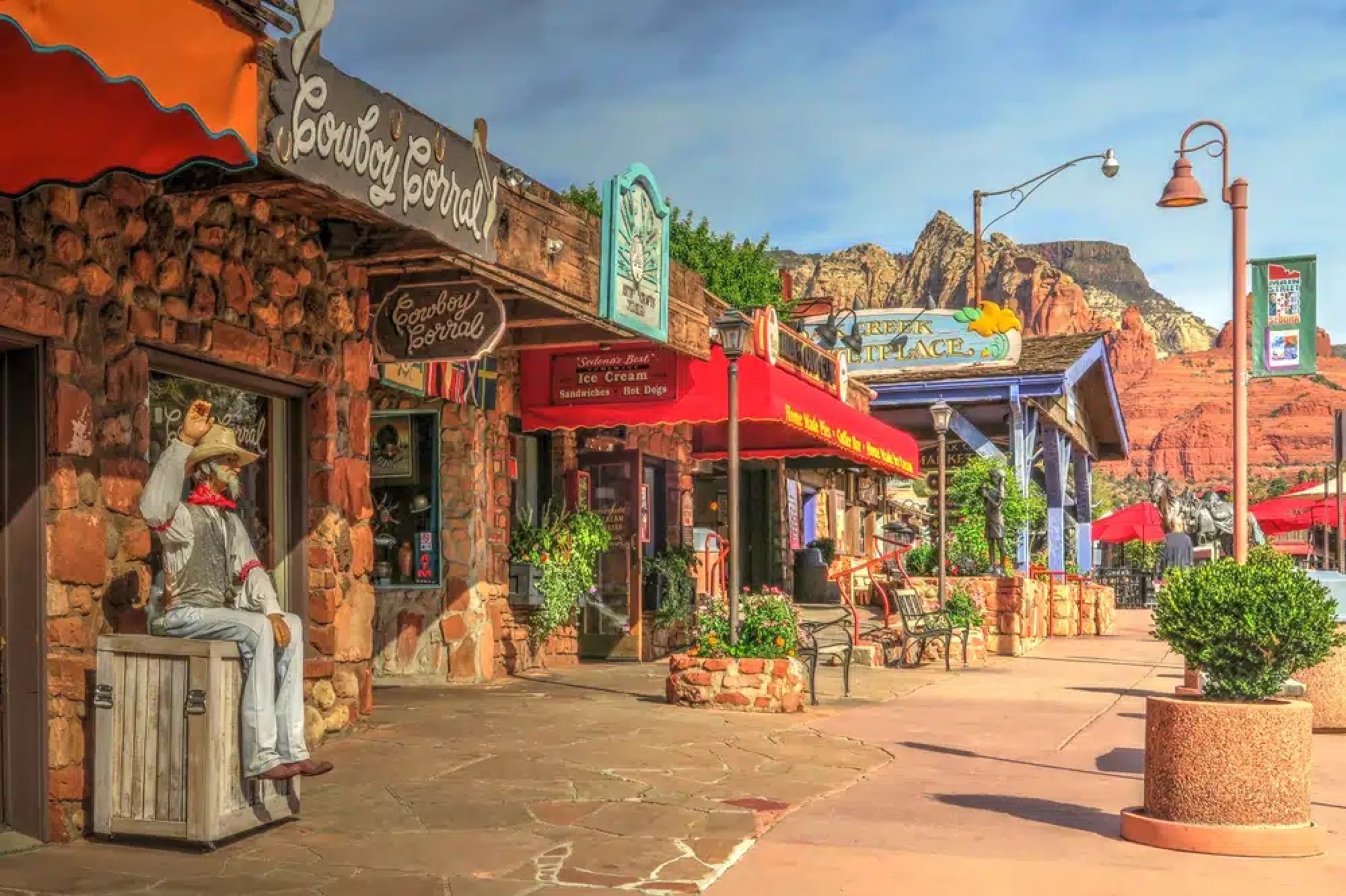
Uptown in the off-season — still worth a wander, but you can actually walk the sidewalk without stopping every ten feet.
What the Light Does in Winter
The sun sits lower in the sky, which means golden hour lasts longer and hits differently. The warm red of the rocks against a cold blue winter sky is a combination you just don't get in July. Early mornings are often crystal clear — the kind of dry, still air that makes everything look slightly too sharp to be real.
And yes, it can snow. Not often, not heavily, but when it does — even half an inch on the formations around Schnebly Hill or on the trail up to Devil's Bridge — it's one of the more remarkable things I've seen out here. The red and white together, the steam rising off the rocks once the sun hits, the silence afterward. Worth planning a trip around, if you're the gambling type.
Cloud cover in winter also tends to be more dramatic than in summer. Monsoon season has its own theater, but a winter storm rolling over the Mogollon Rim and breaking apart over the red rocks at sunset is something I never get tired of watching.
Temperatures: Honest Assessment
I'm not going to pretend it's warm. Daytime highs in January run 45–55°F, sometimes warmer, occasionally colder. Nights drop into the 20s. If you're planning to hike, you'll want real layers — not a light jacket you picked up at an airport gift shop.
That said: midday on a calm, clear January afternoon in Sedona can be genuinely comfortable. Sunny and 52°F with no wind feels better here than it sounds. The elevation is around 4,350 feet, so the sun has real warmth to it even when the air is cold.
Morning hikes are colder but rewarding. I usually start later in winter — 9 or 10 a.m. — let the air come up a bit, and still finish before the afternoon cools down again.
What's Actually Open
Most restaurants and shops stay open year-round. A few of the more tourist-oriented spots on the main strip close early or reduce their hours, but nothing that would leave you stranded. Tlaquepaque stays open. The coffee shops stay open. Elote Cafe — if you can get a reservation — absolutely stays open, and a winter evening there without the summer wait is a genuine luxury.
The trails are open. Some upper routes near the rim see ice in the mornings; traction devices are worth keeping in your daypack if you're going higher up. But the classic Sedona hikes — Bell Rock, Cathedral, Devil's Bridge — are generally accessible and much more pleasant without the summer heat.
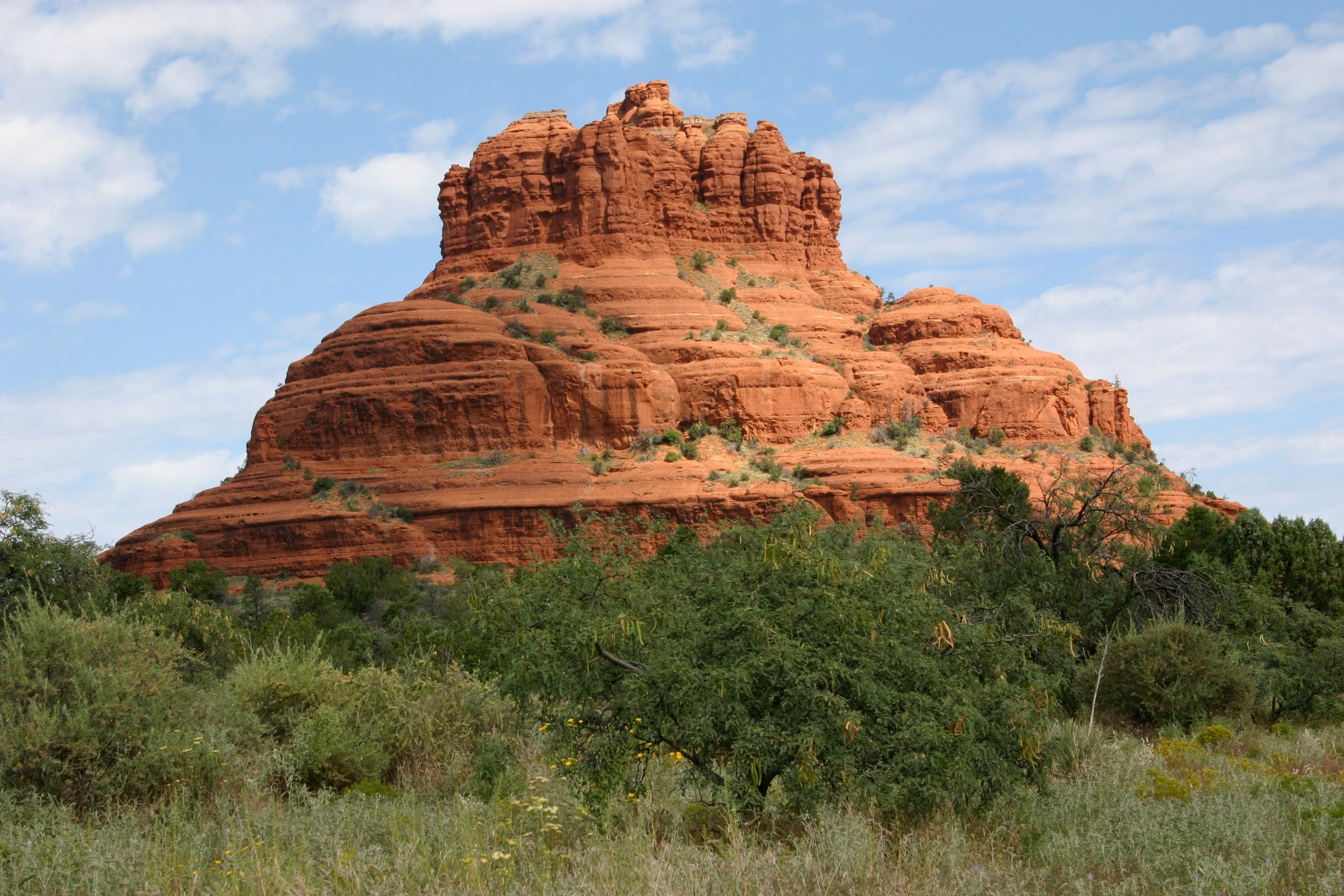
Bell Rock in the off-season — the trail wraps around the base and gets you remarkably close. In winter, you might have it mostly to yourself.
One Thing I'd Recommend
If you come in winter, plan at least one evening outside after dark. The light pollution here is low to begin with, and without the summer haze, the night sky in January can be extraordinary. Drive out toward Red Rock State Park, away from the Uptown glow, and just look up for a few minutes.
If you make it out here in the cold months, ask me before you come — I'll tell you exactly which trailhead is likely to have ice and which coffee shop opens early enough for a proper start.
Notes from Sedona
Want these in your inbox?
Once a month I send the new posts straight to subscribers. Skip checking the site.