
Journal·September 8, 2026·stargazing · things-to-do · sedona-nights · outdoor-activities · local-guide
Sedona Stargazing: Where to Go and When (No Telescope Needed)
Sedona's dark skies are one of its least-talked-about features, and on a clear moonless night, the Milky Way shows up like nothing I've seen anywhere else

Photo by Kaileen Fitzpatrick on Unsplash
Most people come to Sedona for the red rocks in daylight. Fair enough. But the guests who stay up past ten o'clock — the ones who wander outside in their socks and just stop — they're the ones who message me afterward saying that was the thing they'll remember.
Sedona sits at around 4,500 feet. The air is dry. The nearest big-city light dome is Phoenix, about 110 miles south, and it's mostly blocked by intervening ridgelines. On a moonless night with no cloud cover, the sky here is genuinely dark. Not dark-for-Arizona dark. Just dark.
Here's what I tell guests who ask about stargazing.
Timing Matters More Than Location
Before you pick a spot, look at the moon phase. This is the single biggest variable and almost nobody thinks about it. A full moon washes out the Milky Way completely — it's like trying to see stars while someone holds a flashlight in your face. You want the three or four nights on either side of a new moon, ideally with the moon setting before midnight.
Time of year matters too. The Milky Way core is visible from roughly April through October. Peak clarity tends to be July and August, though those months also bring monsoon season — afternoon thunderstorms that clear by evening, usually, but not always. September is my favorite month for this. Warm enough to sit outside comfortably, the core is still up, and the monsoons are winding down.
Winter skies are stunning in a different way — Orion, the Pleiades, exceptionally sharp because the air is cold and still — but the Milky Way core is below the horizon, so you won't get that river-of-stars effect.
Best Spots Near the Retreats
You don't need to drive far. That's the thing. The light pollution in Sedona proper is low enough that even from a backyard with good southern exposure, you'll see more than you expect.
That said, if you want the full effect:
Crescent Moon / Red Rock Crossing is about ten minutes from the Uptown retreats. The parking area off Red Rock Loop Road closes at dusk officially, but the road shoulder nearby is fine. The creek, the silhouette of Cathedral Rock to your south — it's a genuinely good setup for photography if that's your thing, and a beautiful foreground even if you're just looking.
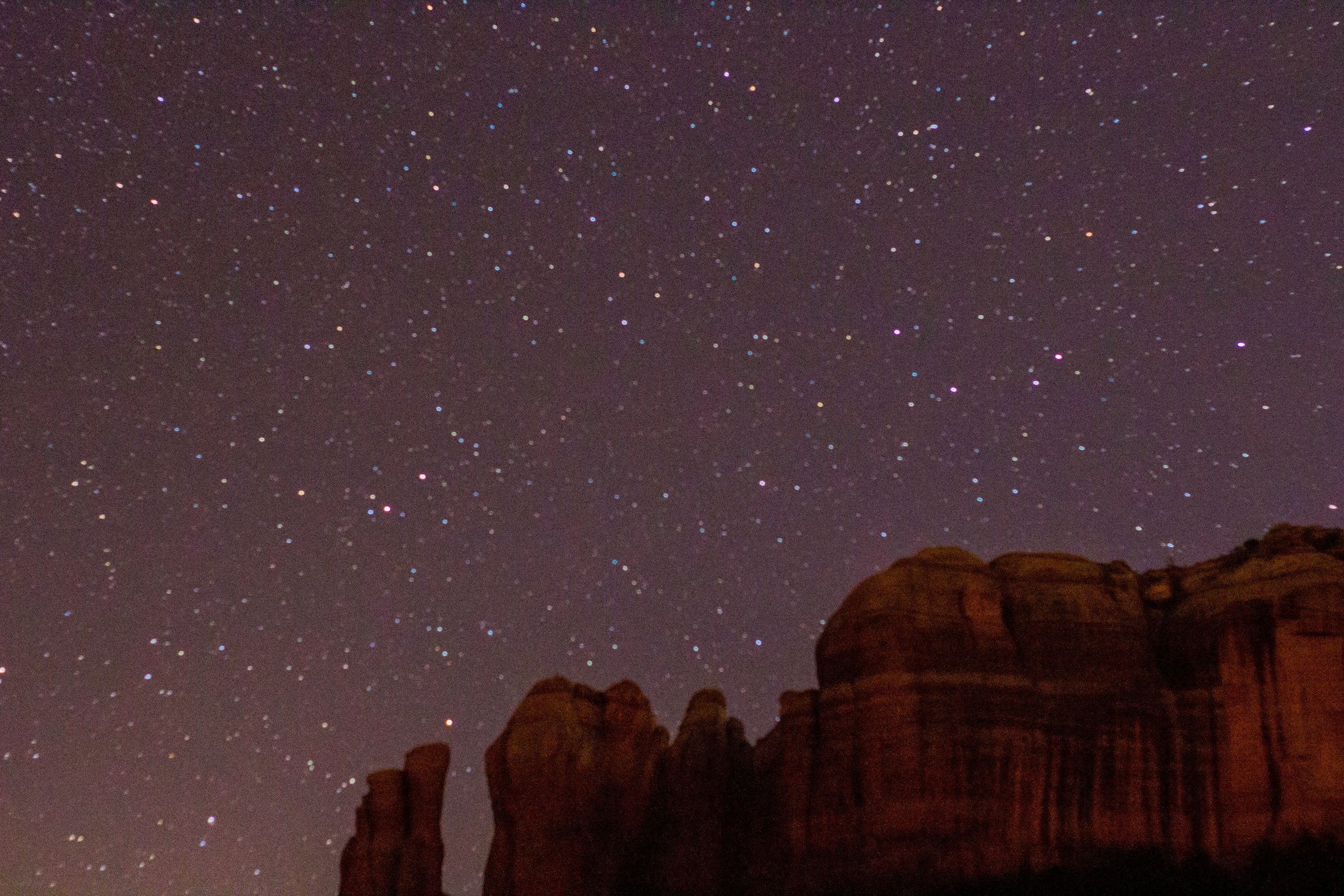
Cathedral Rock's silhouette under a dense star field — this is roughly what you see from Red Rock Crossing on a moonless night in late summer.
Bell Rock Trailhead (near the Village of Oak Creek, about 15 minutes south) offers a wide open southern horizon, which is exactly what you want for Milky Way viewing. The parking lot is free and accessible late at night. Bell Rock itself glows faintly in starlight in a way that's hard to describe.
Schnebly Hill Road — if you're willing to drive an unpaved road about two miles up from the trailhead off 179, you get significant elevation gain and get above the very faint glow of Uptown. This is my pick for the clearest possible sky. A standard sedan can handle the first mile or two if you go slow.
What to Actually Bring
No telescope necessary, and honestly a telescope can be frustrating for casual stargazing — narrow field of view, setup time, finicky alignment. Binoculars are a different story. Even a cheap 7x50 pair will show you Jupiter's moons, the Andromeda Galaxy as a soft smudge, and the Milky Way resolving into individual stars at the edges. Worth tossing in your bag.
A red flashlight (or your phone with a red-light app) preserves your night vision. Your eyes take about 20 minutes to fully dark-adapt, and a single white flashlight blast resets the clock.
Dress warmer than you think. Even July nights in Sedona drop into the mid-50s after midnight. Bring a layer.
Apps That Are Actually Useful
SkySafari and Stellarium are both solid. Point your phone at a light and it names it. I use these mostly to figure out where a planet is, or to confirm that bright thing I'm seeing is Venus and not an incoming aircraft.
For moon phase and optimal viewing windows, the app PhotoPills has a stargazing planner that's overkill for casual use but genuinely excellent if you want to plan around the Milky Way core position.
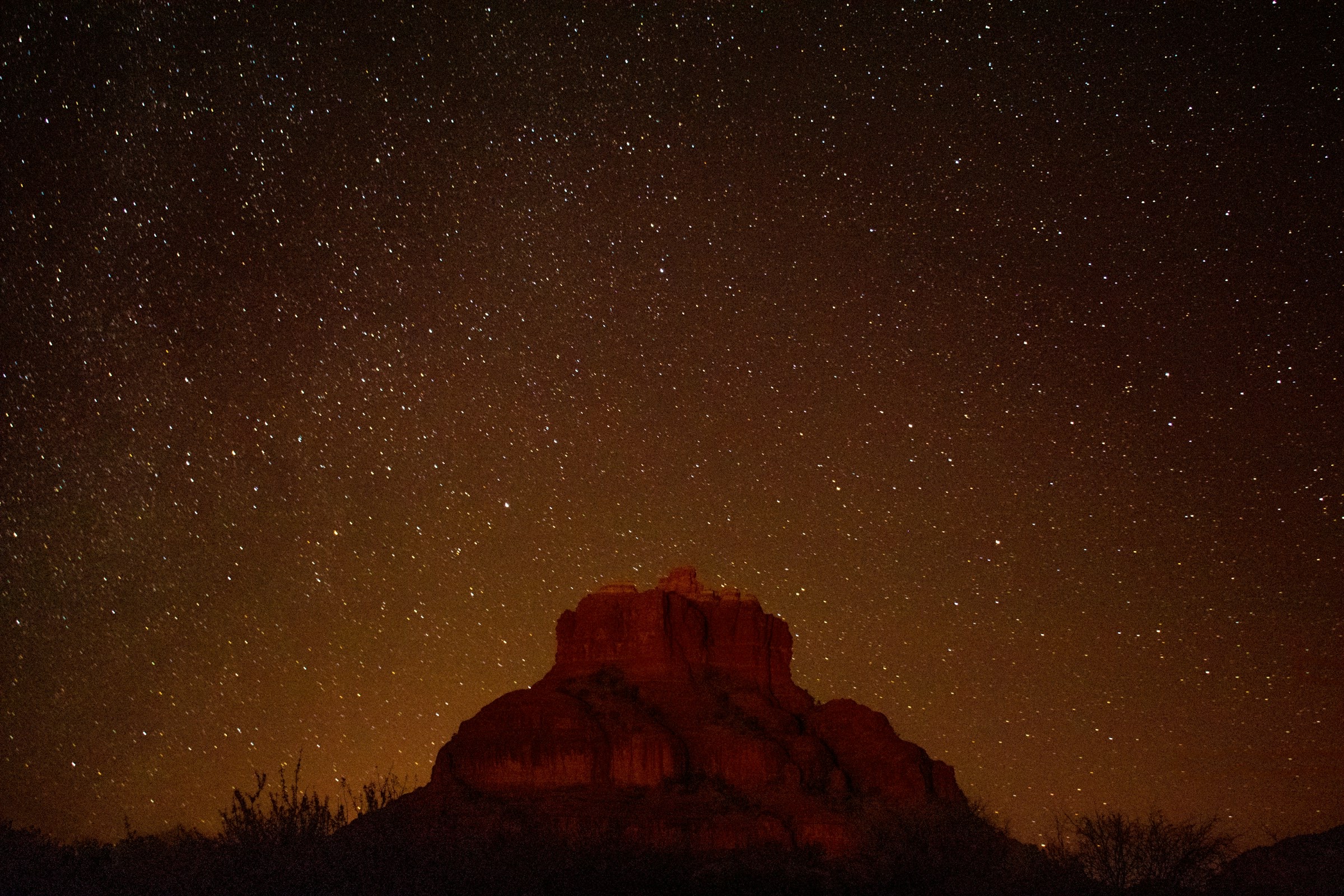
Bell Rock's southern exposure makes the trailhead parking area one of the better spots in the area for getting a clear view of the Milky Way core.
One Last Thing
If you're staying at the casita near Chapel Hill, step outside around 9 p.m. on your first clear moonless night before you drive anywhere. Stand still for five minutes and let your eyes adjust. The sky from that yard has surprised more than a few guests into staying put for an hour.
If you do make it out to Red Rock Crossing after dark, find the biggest flat rock you can and just lie down on it. Still warm from the afternoon sun. Milky Way overhead. That's the one.
Notes from Sedona
Want these in your inbox?
Once a month I send the new posts straight to subscribers. Skip checking the site.