
Journal·October 2, 2026·stargazing · things-to-do · sedona-tips · night-sky · no-telescope
Sedona Stargazing: Where to Go and When (No Telescope Required)
Sedona sits at 4,500 feet with minimal light pollution and 300 clear nights a year — here's how to actually use that
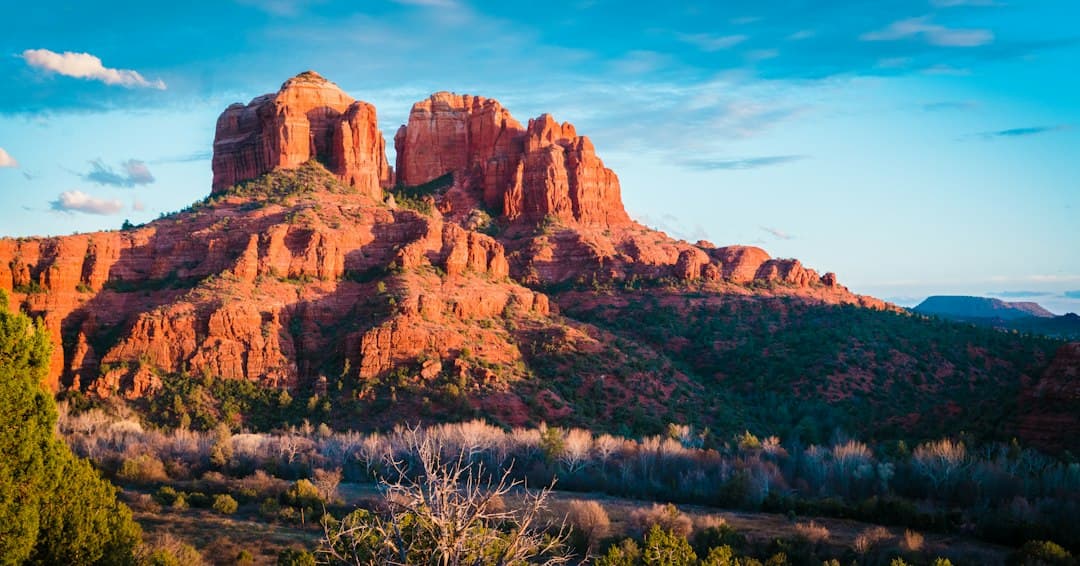
Photo by Kaileen Fitzpatrick on Unsplash
Most people come to Sedona for the red rocks. A lot of them accidentally discover the sky. On a clear night with no moon, you can stand outside my Chapel Hill casita and watch the Milky Way rise over the formations like it's doing something on purpose. You don't need equipment. You don't need a guide. You mostly just need to know where to stand and when to show up.
Why Sedona Actually Works for This
Altitude helps. At 4,500 feet you're above a meaningful chunk of atmospheric haze. The surrounding national forest keeps development — and its light — pushed back. And unlike Flagstaff to the north (which has an International Dark Sky designation and more aggressive lighting ordinances), Sedona isn't perfectly dark. Uptown glows. Route 89A has streetlights. But get a mile outside the commercial corridor and the difference is real.
The sweet spot is the new moon window — two or three nights on either side of a new moon, when there's no lunar wash. I check timeanddate.com a week out and plan accordingly. A full moon is beautiful in its own way and lights the rocks dramatically, but it wipes out the fainter stars. For the Milky Way core, you want dark.
The Spots Worth Going To
Airport Mesa Loop is my first recommendation for most guests — especially if you're not up for a hike in the dark. The upper parking lot sits at around 4,600 feet with a 270-degree view. Get there 30 minutes before astronomical twilight ends, let your eyes adjust, and face southwest. The vortex crowds are gone by 9pm most nights.
Schnebly Hill Road is rougher but rewards the effort. It's unpaved and climbs fast — a regular sedan can usually handle the first mile or so, which is enough to get above most of the town glow. Pull over anywhere safe. There are no fences, no crowds on weeknights, and the rock formations silhouette beautifully against the core.
The Chapel of the Holy Cross area — specifically the pullouts on Chapel Road heading south — gives you a foreground of red rock walls and a sky that opens up to the east. This is closer to my casita, and I've watched guests set up a blanket in the pullout and stay until midnight without seeing another car.
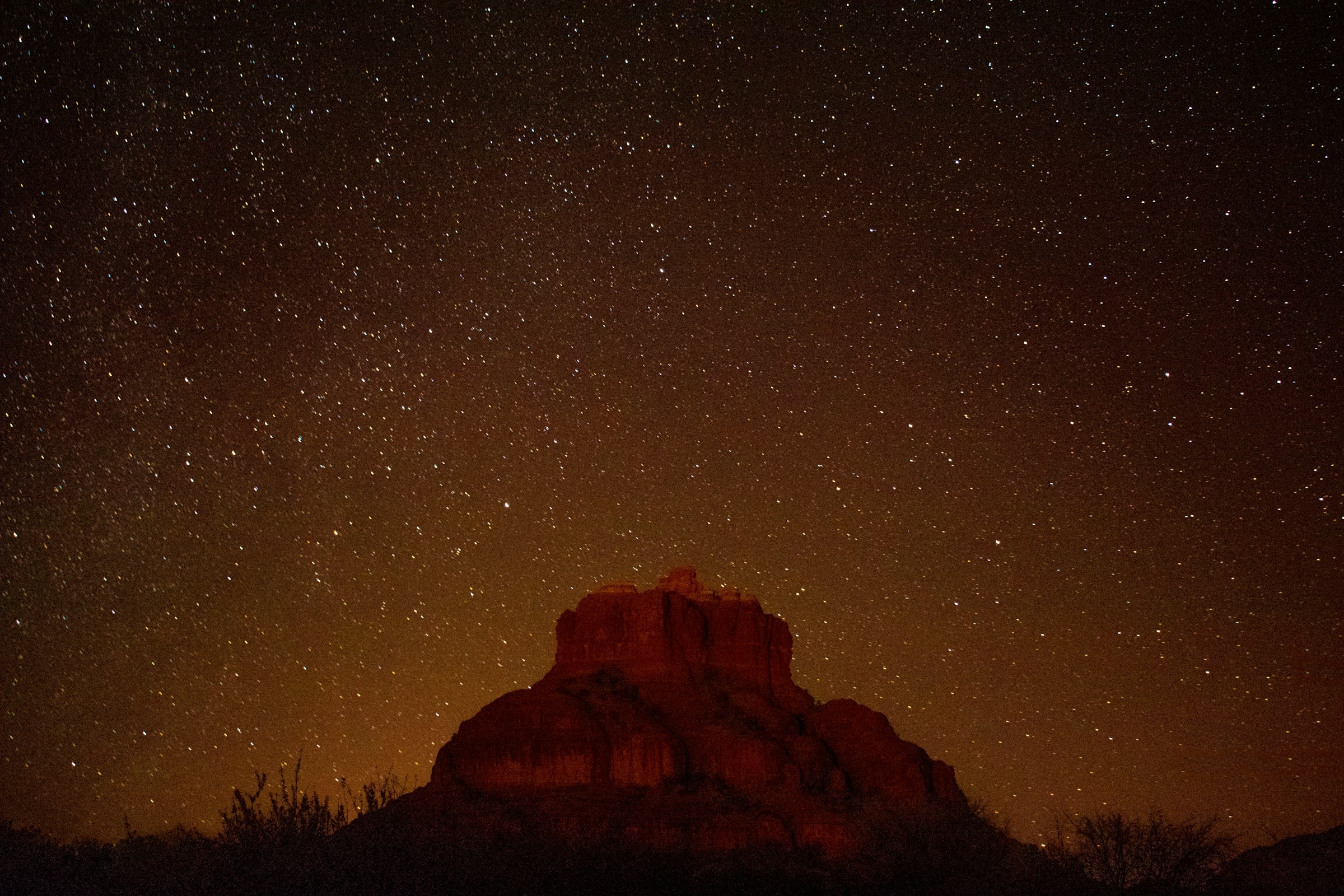
Bell Rock, just south of the Village of Oak Creek — the Village sits darker than Uptown and makes a good base for late-night sky watching.
Village of Oak Creek, about 7 miles south on 179, is genuinely darker than Uptown Sedona. Bell Rock and Courthouse Butte trailheads are accessible after dark (the trail is wide and obvious if you have a headlamp), and the sky to the south is noticeably less contaminated. If you're staying near Uptown but willing to drive 15 minutes, this is worth it on a good night.
Timing: When the Sky Actually Delivers
Summer (June through early September) is Milky Way season. The galactic core rises in the southeast around 10pm and arcs overhead by midnight. It's warm enough to lie on a rock without freezing, and monsoon season — while it can cloud things out — produces the kind of post-storm clarity that makes the sky look scrubbed.
Winter is less reliable for the core (it's below the horizon much of the night) but the stars themselves are sharper and the lack of tourists means you'll have most pullouts to yourself. Orion and the Pleiades are worth it on their own.
Spring and fall are the transition seasons — good odds, comfortable temperatures, and the Milky Way core becomes visible again by late April.
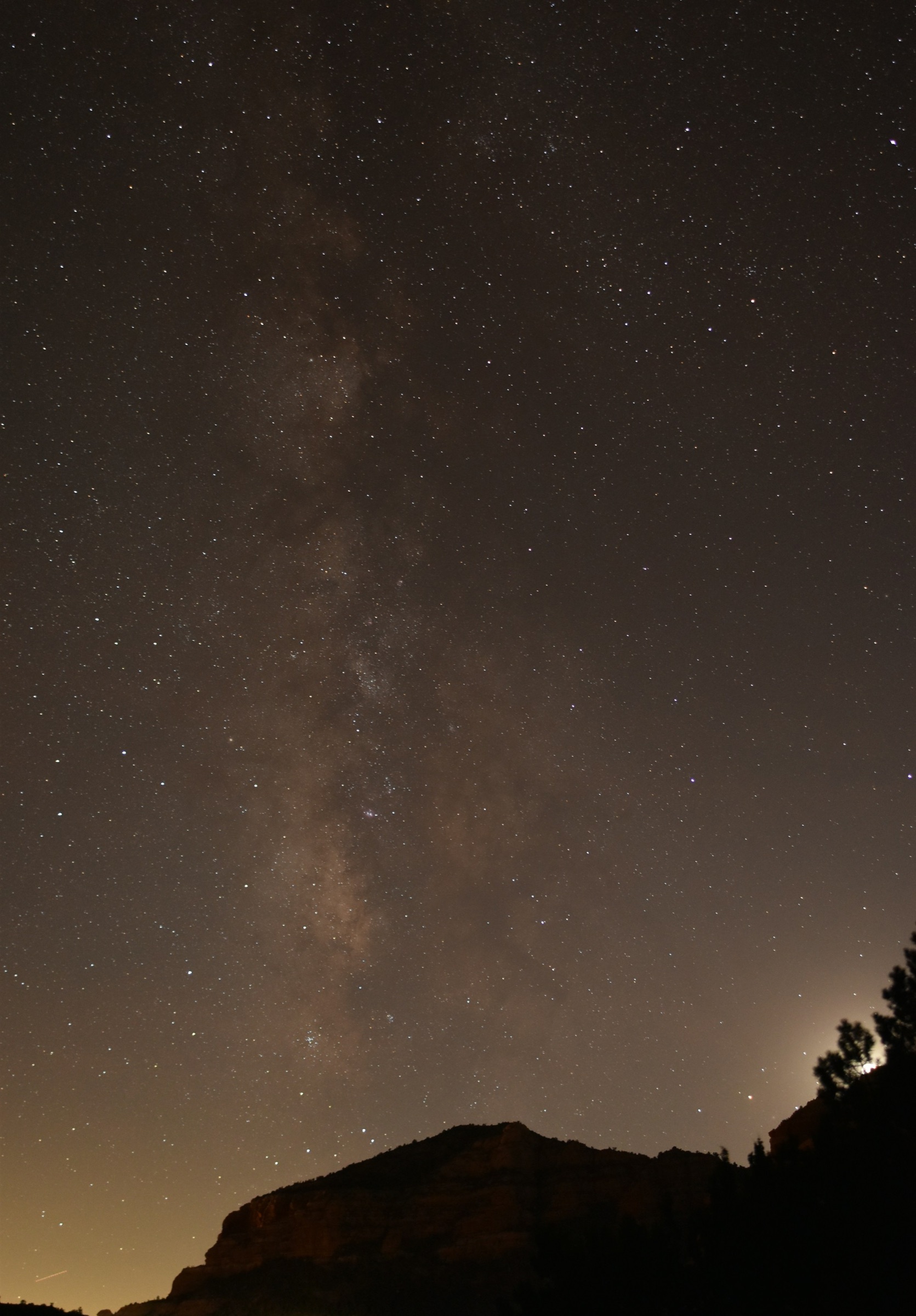
The Milky Way core peaks in the southeast during summer months — give your eyes 20 full minutes to dark-adapt before you judge what you're seeing.
A Few Practical Notes
Bring a red-light headlamp, not a white flashlight. White light kills your night vision for 20 minutes. Red preserves it. You can get one for $12 at the Ace Hardware on Coffee Pot Drive.
Dress warmer than you think. Even in July, Sedona nights drop into the 60s at elevation. October nights can hit 40°F.
The Sky View app (free, iOS and Android) is enough to identify what you're looking at without ruining the experience with a bright screen. Turn the brightness all the way down.
If you make it out to Schnebly Hill on a new moon night in July or August, give yourself at least an hour. The first 20 minutes are just your eyes catching up to what's actually there.
Notes from Sedona
Want these in your inbox?
Once a month I send the new posts straight to subscribers. Skip checking the site.